

False Flame Lockout
The L6 error code on Ideal boilers indicates false flame lockout.
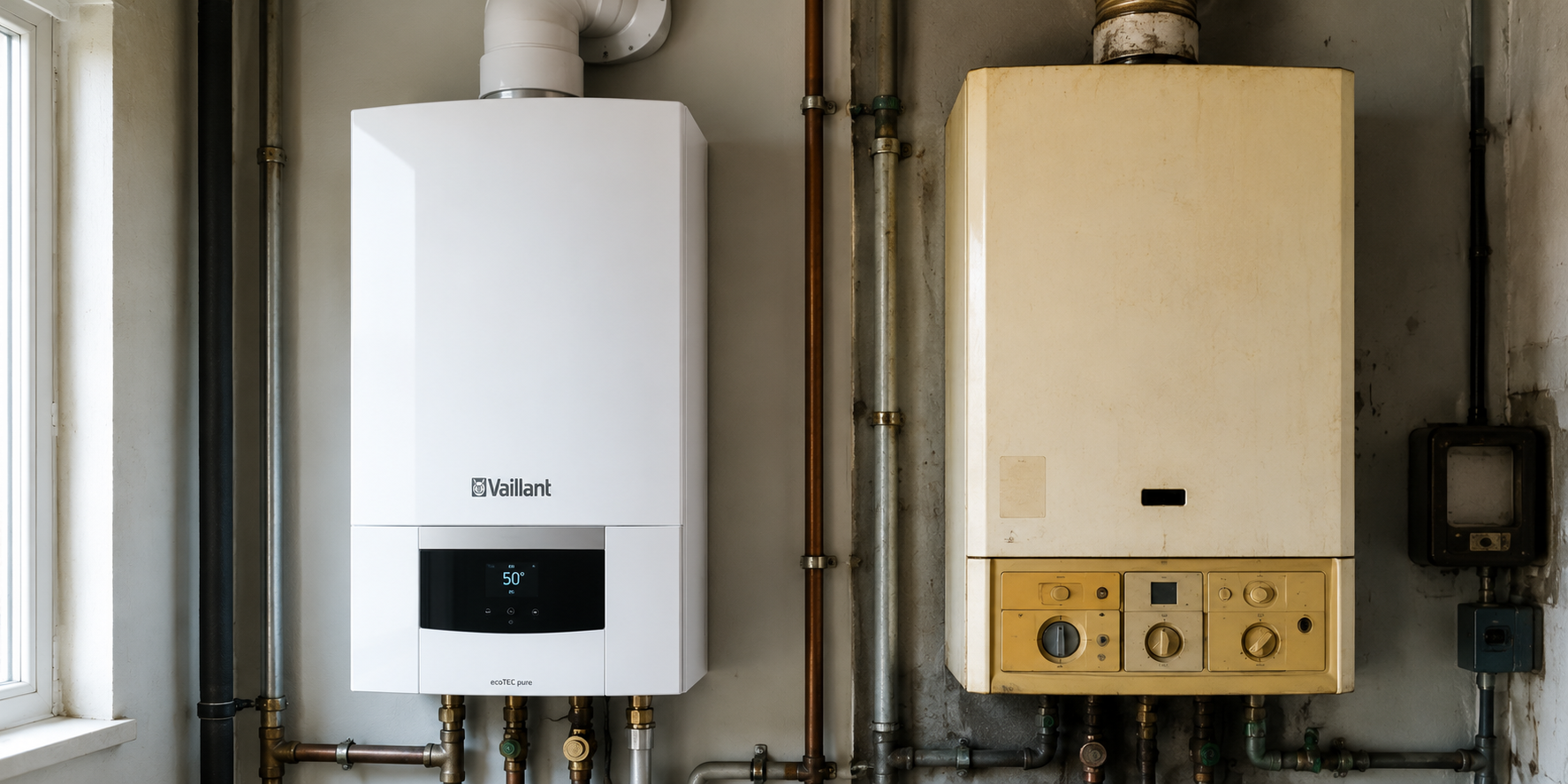
Ideal L6 means: false flame lockout. On this component the documented failure modes are ignition or detection electrode dirty, worn or out of position or wiring, connector or harness of the false flame damaged or loose. A Gas Safe registered engineer should diagnose the root cause.
What Does L6 Mean
The L6 code is shown by the boiler’s control board when it detects false flame lockout. The boiler then stops instead of continuing to run in that condition: the code is the appliance reporting a problem, not proof that the boiler is broken.
| What you see on the boiler |
|---|
| The display shows L6 and the boiler stops until the fault is cleared |
Common Causes
The manufacturer does not publish a cause list for this specific code. The causes below are the failure modes documented for the same component on other boilers, confirmed by the service literature of 4 different manufacturers.
| Cause |
|---|
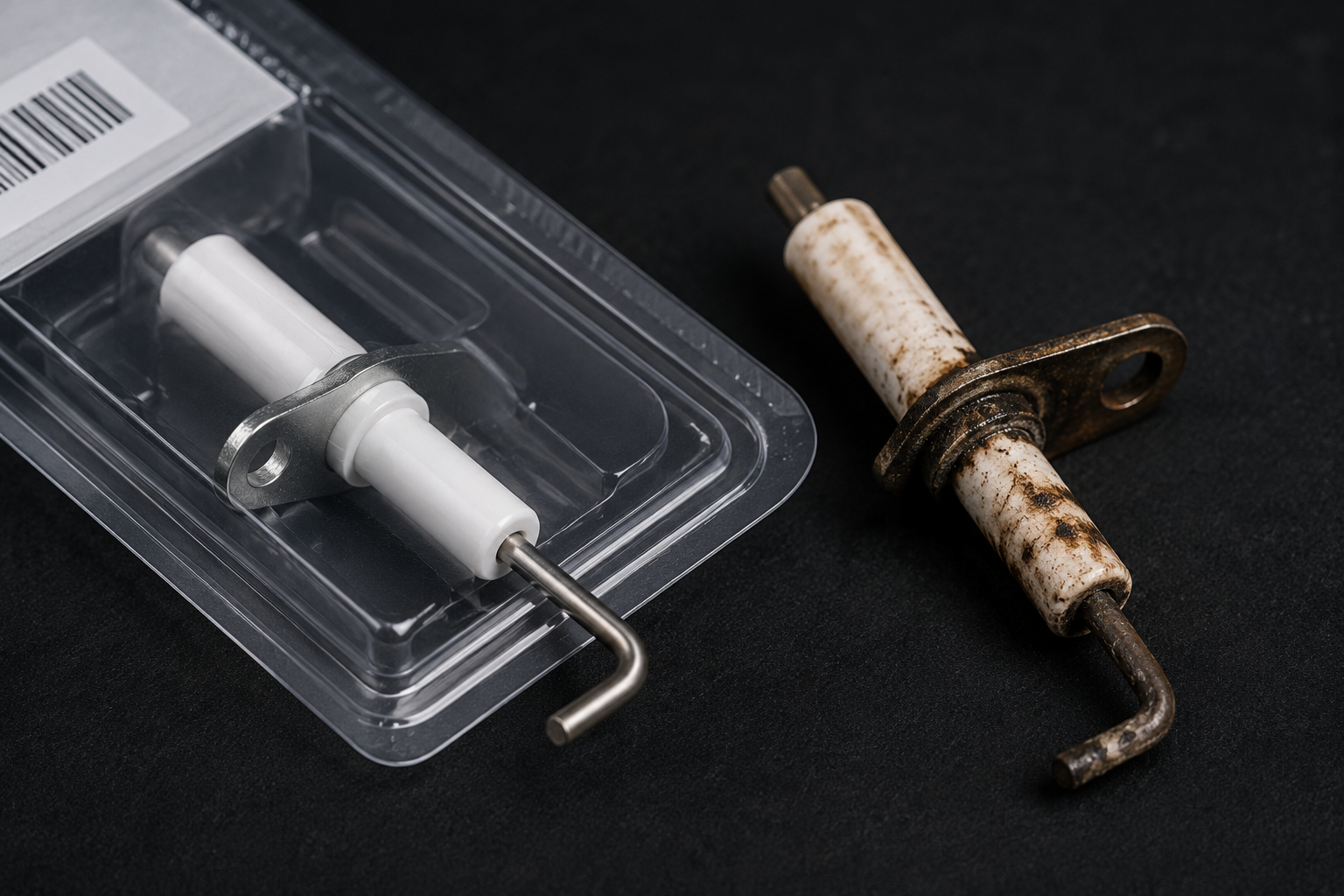
| Ignition or detection electrode dirty, worn or out of position |
| Wiring, connector or harness of the false flame damaged or loose |
Safety Warning
L6 is a gas-related fault. Never attempt to repair or adjust the gas valve, burner assembly, or flue system yourself. All gas work must be carried out by a Gas Safe registered engineer (UK) or licensed HVAC technician (US). Repeated resets after ignition failure can cause unburnt gas to accumulate inside the combustion chamber — this is a serious safety hazard. If you smell gas at any point, turn off the gas supply at the meter, open windows, leave the property, and call your gas emergency service immediately. Gas-related fault. Do not open the boiler casing or attempt repairs to the gas valve, burner, ignition or flue. Repeated resets are unsafe. Diagnosis and repair must be carried out by a Gas Safe registered engineer.
Parts & Prices
Prices shown are indicative. Actual prices and availability vary by region.
Step-by-Step Diagnosis
1. Verify gas supply — check gas meter is on and other gas appliances work. 2. Inspect the ignition electrode — look for cracks, carbon build-up, or incorrect gap (typically 3-4mm). 3. Check the ignition lead — ensure it is securely connected and not damaged. 4. Test the gas valve — measure voltage at the gas valve terminals during ignition attempt (should read 24V AC or mains depending on model). 5. Inspect the flue system — check for blockages, birds' nests, or debris. 6. Check the condensate trap and drain — a blocked condensate pipe can prevent ignition. 7. Verify the ionisation probe is clean and correctly positioned. 8. If all above pass, test the PCB by measuring outputs during ignition sequence
How to Fix It
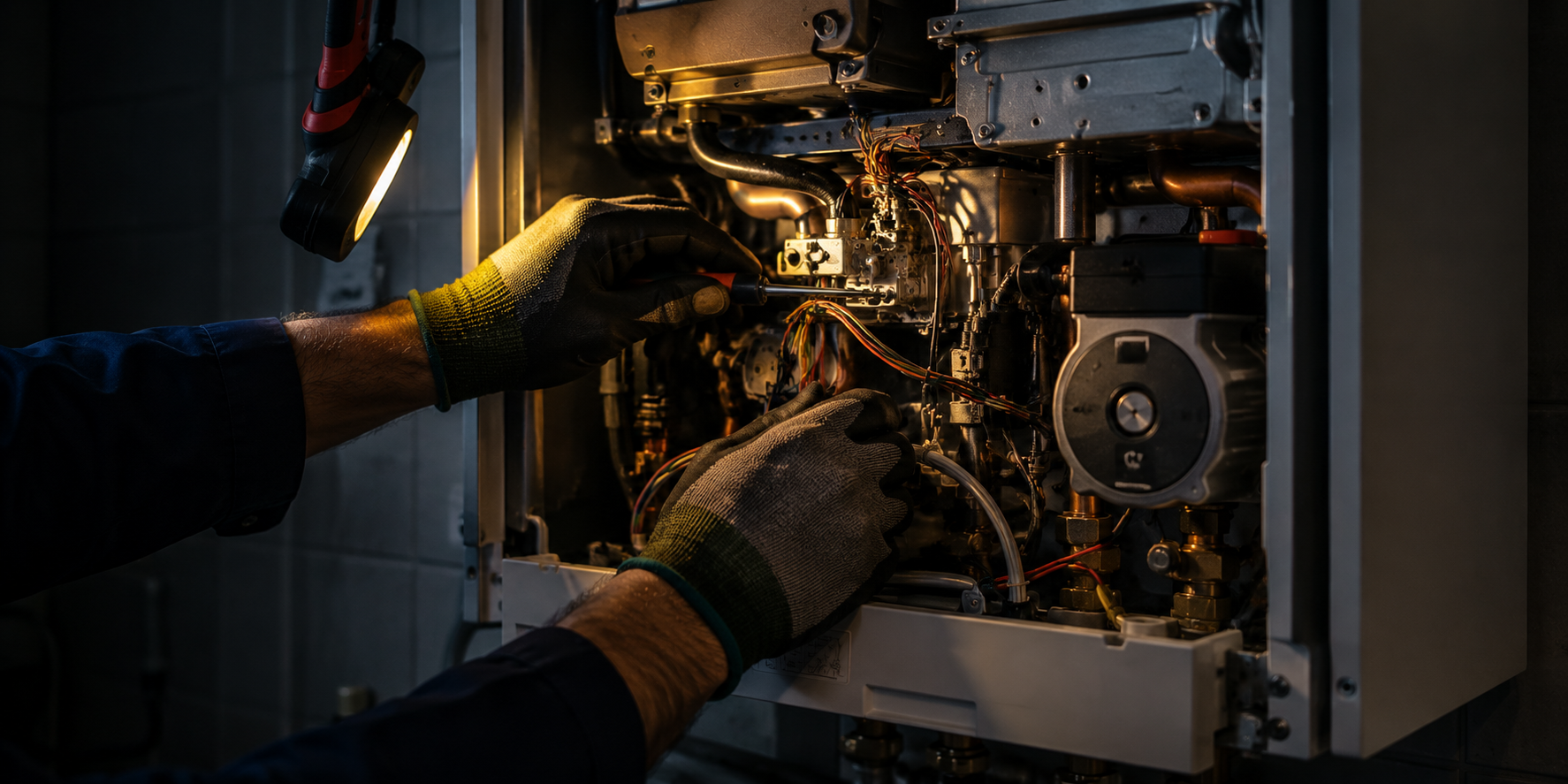
Inspect the ignition and detection electrode: clean off any deposits, check the gap and position against the manual, and replace it if it is worn.
Unplug and re-seat the connector of the false flame, then check the harness for chafing, corroded pins and breaks in continuity.
Refer to the Ideal service documentation for the detailed procedure. Only a qualified engineer should carry out these repairs.
Diagnostic Tools
TroubleAtlas Score
What Is the TroubleAtlas Score?
Every boiler model is independently evaluated and scored by TroubleAtlas across 6 dimensions: reliability, efficiency, parts availability, service network, value for money, and user satisfaction. The score helps you compare models and make informed decisions when choosing a new boiler.
See All Boiler Scores →Boiler Breakdown Cover
Boiler Breakdown Cover
Protect against unexpected repair costs. Cover plans include annual service, emergency callouts within 24 hours, and full parts replacement. Compare plans side by side and choose the level of protection that fits your home and budget.
Coverage Plans — Coming SoonConsidering a New Heating System
Considering a New Heating System?
If your boiler or heat pump is over 10 years old, replacing it with a modern condensing boiler or air-source heat pump could save you up to 30% on energy bills and significantly reduce your carbon footprint.
Compare Heating System Prices →
YouTube Channel
Watch the fixes. Follow the channel.
Step-by-step boiler repair guides, equipment reviews, and heating system comparisons from qualified engineers.
New fixes every weekFix in 5
Quick fixes for common boiler faults explained in under 5 minutes
Boiler Comparator
Side-by-side comparisons of popular boiler models
Boiler Reviews
Independent reviews with TroubleAtlas Score ratings
Find a Specialist
Don’t fix it alone. Find a trusted heating engineer near you.
TroubleAtlas connects you with vetted local heating professionals who can inspect, diagnose and repair your boiler safely — no guesswork, no unnecessary call-outs.
Local heating professionals are coming to your area
We’re onboarding Gas Safe registered and licensed HVAC engineers city by city. Check back soon, or search above to see current availability.
TroubleAtlas Pro
Get cited by AI. Get found by customers.
TroubleAtlas Pro puts your business in front of homeowners searching for exactly this fault, and structures your listing so AI assistants can cite you as a trusted source.
- ✓ Appear on error code pages viewed by thousands of homeowners
- ✓ AI assistants cite your listing as a verified local specialist
- ✓ Receive direct leads with customer name and contact details
- ✓ TroubleAtlas Certified badge for your marketing materials
Affected Models
Ideal models that can display fault code L6:
| Model Family | Output Range | Frequency |
|---|---|---|
| All Ideal models | — | Possible |
Frequently Asked Questions
Inspect the ignition and detection electrode: clean off any deposits, check the gap and position against the manual, and replace it if it is worn. According to the technical documentation, this is the first check on the list for L6.
L6 is classified as a high-severity fault: it involves gas, combustion or flue components. Do not keep resetting the boiler and do not attempt the repair yourself — call a Gas Safe registered engineer.